Author: RiskOne

  • Securing Critical Infrastructure: Insights from the 7th Annual NW Fire & Security Expo

    Securing Critical Infrastructure: Insights from the 7th Annual NW Fire & Security Expo

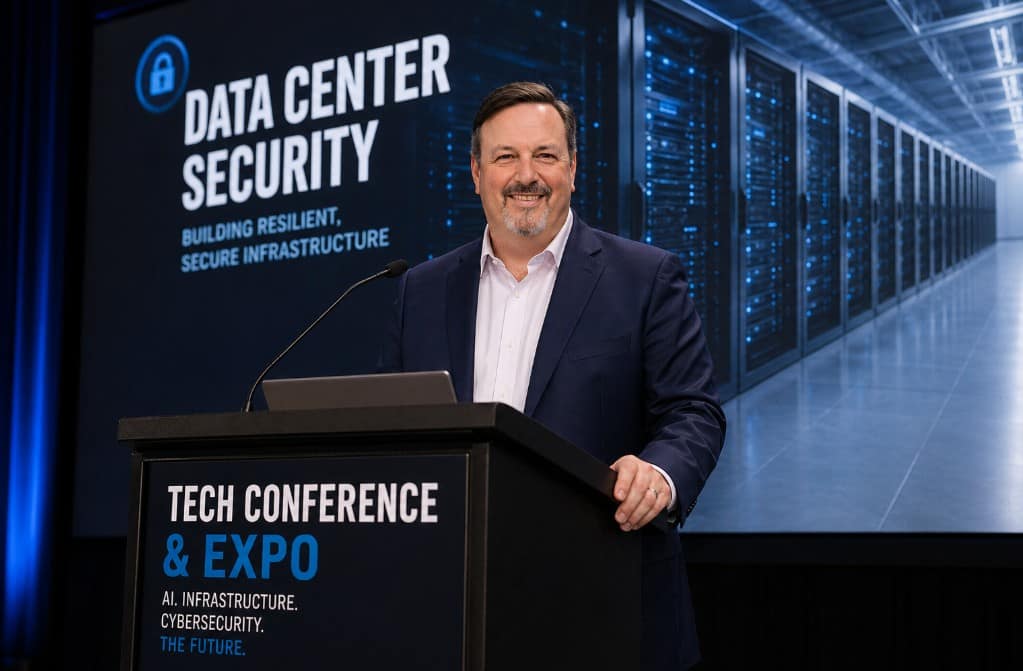
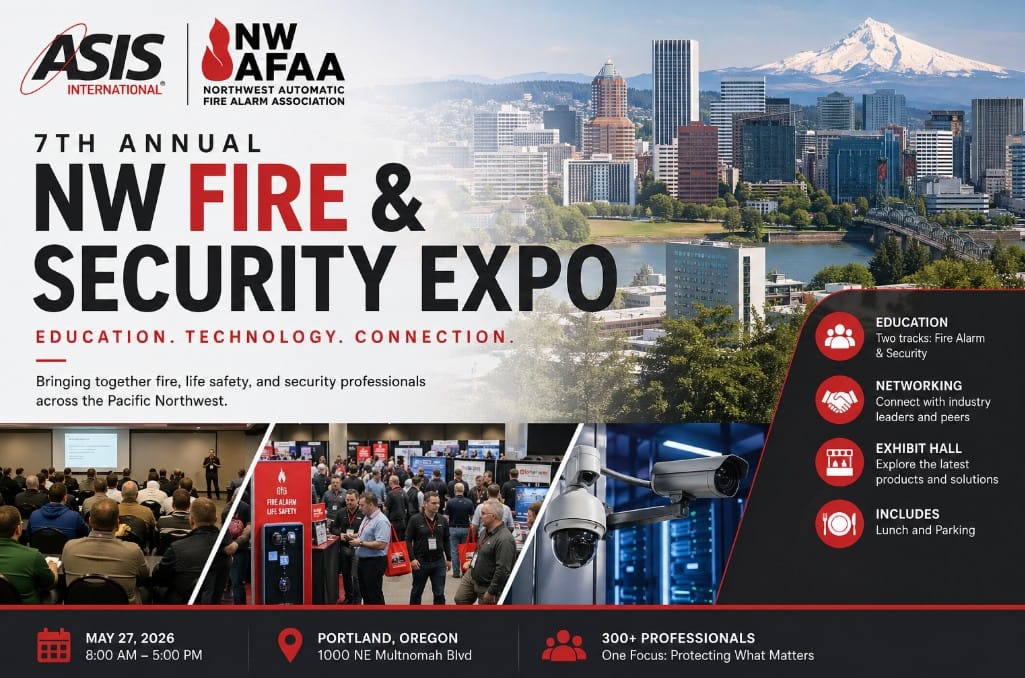
    Christopher Hills will be speaking at the 17th Annual NW Fire & Security Expo, hosted by the Northwest Automatic Fire Alarm Association in Portland, Oregon. This event brings together professionals from across the fire, life safety, and security industries for a full day of education, technology exposure, and practical discussion. Designed as a working event rather than a passive conference, the expo connects architects, engineers, consultants, integrators, manufacturers, and end users who are directly responsible for designing, implementing, and operating critical systems in real-world environments.

    The expo features two concurrent education tracks focused on fire alarm systems and security, along with an exhibitor hall showcasing current technologies and solutions shaping the industry. With hundreds of professionals in attendance, it provides a rare opportunity to engage directly with decision-makers and technical experts who influence how systems are designed, specified, and deployed across the Pacific Northwest. The event emphasizes practical knowledge, code alignment, and the integration of emerging technologies into existing infrastructure.

    Christopher Hills, CPP, CISM, DCIS, will present from a critical infrastructure and data center security perspective, drawing on his experience securing hyperscale and enterprise environments as well as insights from his book Data Center Security: The Blueprint for Resilient Infrastructure. His focus will address how the traditional concept of the security perimeter is expanding beyond the facility to include power infrastructure, utilities, and supply chain dependencies. He will also examine “grid-to-rack” risk, highlighting how vulnerabilities in supporting infrastructure can directly impact uptime and resilience, and how organizations can better align physical security, cybersecurity, and operational practices into a unified approach.

    For professionals working in architecture, engineering, consulting, integration, or operations, the NW Fire & Security Expo represents a focused environment where standards, technology, and operational realities intersect. It offers attendees practical insight into current risks, exposure to new solutions, and direct engagement with peers and industry leaders shaping the future of fire and security across critical infrastructure sectors.
  • “Chris writes “AI Infrastructure: Scaling Risk, Securing Growth” for International Finance Magazine

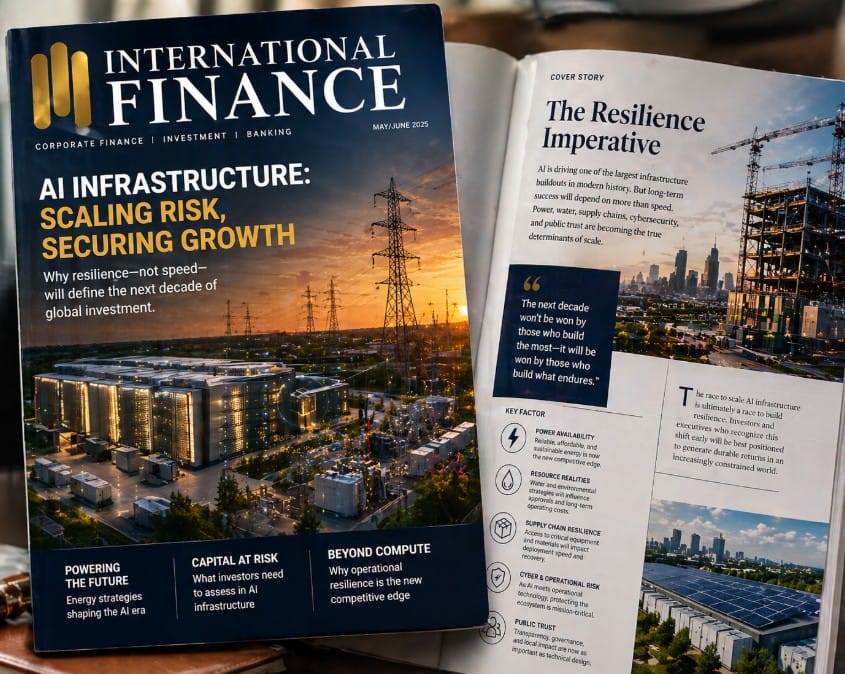
    “Chris writes “AI Infrastructure: Scaling Risk, Securing Growth” for International Finance Magazine

    For readers of International Finance, the discussion around AI infrastructure is as a capital allocation, risk, and global competitiveness story. As a publication focused on connecting decision-makers, investors, and business leaders across emerging and developed markets, the magazine sits at the intersection where infrastructure scale meets financial consequence.

    This article frames AI infrastructure not simply as a race for compute, but as a test of resilience across energy systems, supply chains, and governance. Over the next decade, the ability to scale AI will increasingly depend on access to reliable power, critical materials, and stable operating environments. The International Energy Agency projects that data center electricity demand will nearly double by 2030, underscoring how infrastructure constraints, not innovation limits, are beginning to shape growth. In this context, AI becomes less about technological capability alone and more about who can sustain it at scale.

    For the financial audience of International Finance, this shift has direct implications. Infrastructure resilience is emerging as a determinant of valuation, investment risk, and long-term returns. Projects that cannot secure power, manage supply chain dependencies, or navigate regulatory and community pressures will face delays, cost overruns, or stranded capital. Conversely, organizations that align resilience with deployment strategy will gain a structural advantage, positioning themselves to scale more predictably in constrained environments.

    Ultimately, the article positions resilience as a market signal. It is no longer a back-end operational concern, it is becoming a forward-looking indicator of which companies, regions, and investment strategies are best equipped to lead in the AI economy. For global investors and executives, that shift changes the conversation from “How fast can we build?” to “How sustainably, and securely, can we scale?”

  • Christopher Hills to Appear on The Daly Threat Report Podcast

    Christopher Hills to Appear on The Daly Threat Report Podcast

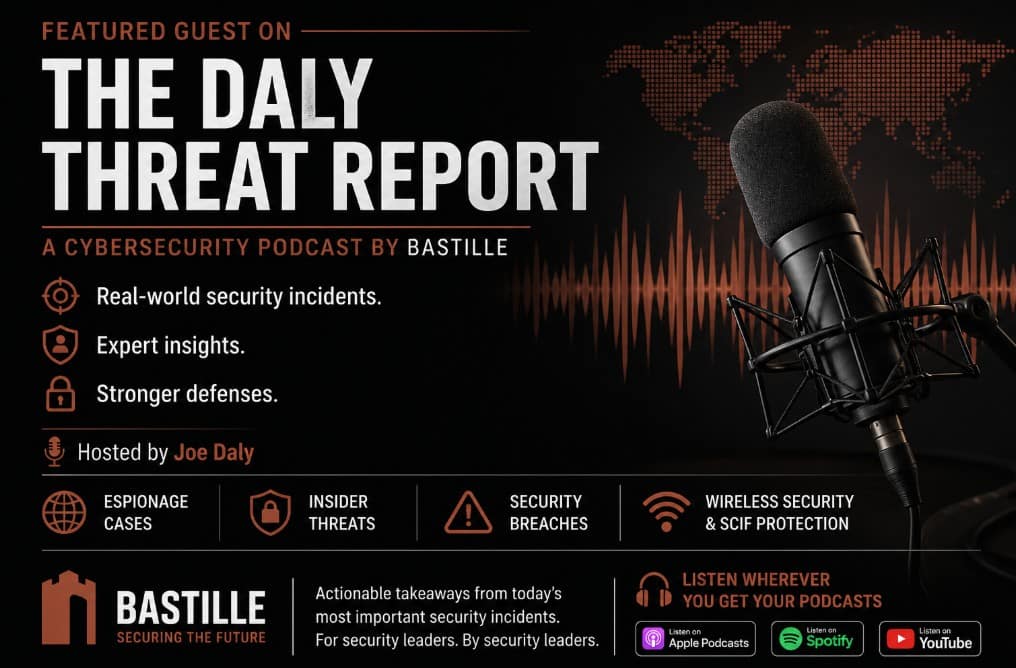
    Security and data center infrastructure expert Christopher Hills will be a featured guest on an upcoming episode of The Daly Threat Report, a cybersecurity podcast produced by Bastille and hosted by Joe Daly.

    The Daly Threat Report is known for its deep analysis of real-world security incidents, espionage cases, insider threats, and high-impact breaches. The podcast translates complex threat scenarios into practical, actionable insights for security professionals operating in high-risk and highly regulated environments. With a strong focus on wireless vulnerabilities, SCIF protection, and insider threat detection, the show has become a valuable resource for security leaders across defense, government, and critical infrastructure sectors.
    Hills’ appearance will bring a unique perspective shaped by decades of experience at the intersection of physical security, cybersecurity, and data center infrastructure. Drawing from his background supporting large-scale enterprise environments and mission-critical facilities, he will discuss how modern threat actors are increasingly exploiting the seams between physical and digital systems, and what organizations must do to close those gaps.

    The conversation will also explore the evolving risk landscape surrounding data centers and AI infrastructure, including the growing importance of securing power systems, communications pathways, and operational technology environments. Hills will emphasize the need for integrated security strategies that move beyond traditional silos and address risk from a “grid-to-rack” perspective.

    “As threats become more sophisticated, the lines between cyber and physical security continue to blur,” Hills said. “Organizations need to think differently about how they secure infrastructure, especially in environments where uptime, confidentiality, and resilience are non-negotiable.”

    The episode is expected to provide practical guidance for security leaders responsible for protecting sensitive environments, as well as those navigating the increasing complexity of modern infrastructure security.

    Listeners can learn more about the podcast at Bastille’s official site and tune in to hear Hills’ insights on strengthening security posture in today’s evolving threat environment.

  • Chris Speaking at Seattle Tech Conference on AI and Critical Infrastructure

    Chris Speaking at Seattle Tech Conference on AI and Critical Infrastructure

    Seattle, WA – Security and data center infrastructure expert Christopher Hills will be among the featured speakers at an upcoming full-day technology conference in Bellevue, Washington, focused on artificial intelligence and emerging technologies shaping the future.

    The event will bring together professionals from across the technology spectrum to explore topics including artificial intelligence, cybersecurity, data centers, microgrids, cryptocurrency, autonomous vehicles, and smart cities. Attendees can expect a full agenda of keynote presentations, technical sessions, and motivational talks, along with networking opportunities throughout the day.

    Hills, known for his work in data center security and critical infrastructure resilience, will contribute to discussions around securing modern digital environments as AI-driven systems scale. His perspective draws from decades of experience aligning physical security, cyber risk, and operational design in mission-critical facilities.

    The conference will feature participation from leading organizations including Microsoft, Google, Meta, Expedia, Navy, FAA, and a wide range of engineers, analysts, and developers. In addition to technical sessions, the event includes a pre-conference dinner, breakfast and lunch service, and a networking reception.

    All sessions will be recorded, and attendees will receive conference materials and event merchandise. The conference will take place at The Hub Event Space in Bellevue, with registration available online.

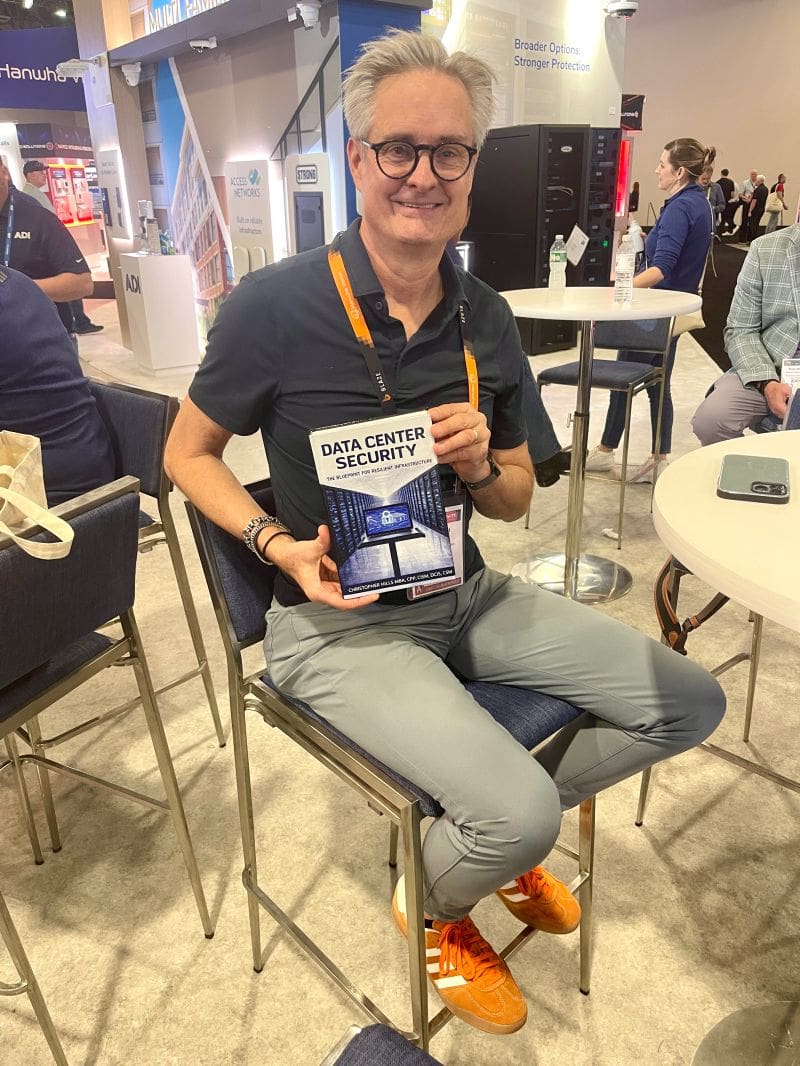
  • Forrest Gist, PE, CPP with my newest book!

    Forrest Gist, PE, CPP with my newest book!

    Forrest Gist, PE, CPP, is one of those professionals who sits at the intersection of engineering discipline and real-world security execution. As a Global Technology Principle at Jacobs Engineering, his work reflects a deep commitment to integrating security into the built environment as a core component of how facilities are designed and operated. His background as both a Professional Engineer and a Certified Protection Professional gives him a rare perspective: the ability to translate security requirements into technical, buildable solutions that align with architecture, infrastructure, and long-term operational needs.

    Seeing Forrest at ISC West, holding Data Center Security: The Blueprint for Resilient Infrastructure, was a great moment. Forrest has long been an advocate for thoughtful, integrated design, particularly in how security systems are specified and implemented. His perspective has helped shape conversations across the A&E community, especially around the need to move beyond siloed systems and toward cohesive, engineered security strategies. That alignment made the exchange meaningful; the book reflects many of the same principles he’s been advancing throughout his career.

    What stands out about Forrest is how he bridges theory and practice. He’s not just contributing to the conversation, he’s helping define how security is actually delivered in complex environments. Whether it’s working with global teams or influencing design standards, his focus remains consistent: make security practical, scalable, and aligned with how systems are truly built and used.

    Moments like this, connecting with professionals like Forrest, sharing ideas, and seeing the work resonate, are what make ISC West valuable. It’s where experience meets execution, and where the next phase of the industry continues to take shape.

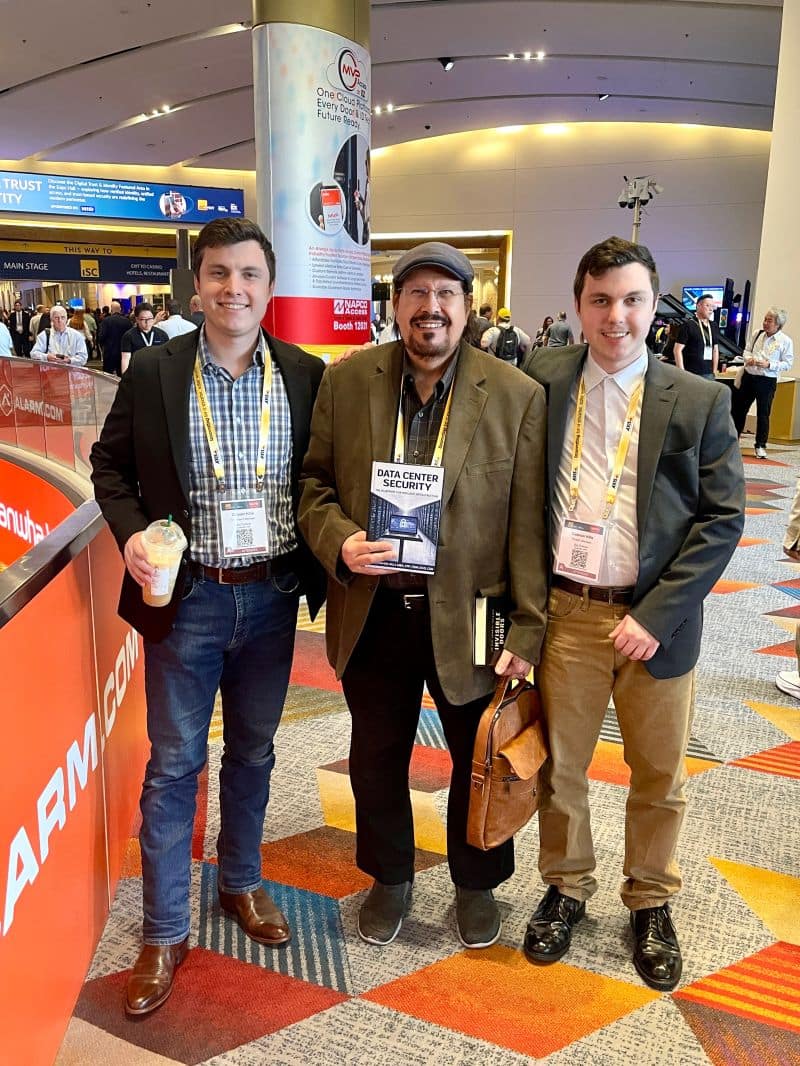
  • Ray Bernard, with my boys holding my newest book!

    Ray Bernard, with my boys holding my newest book!

    Always good to connect with Ray Bernard at ISC West. Ray has spent decades shaping how the industry thinks about security, bringing a disciplined, engineering-driven approach that continues to influence practitioners, consultants, and organizations across the board. His work through RBCS reflects that same focus: practical, experience-based guidance that helps bridge the gap between security concepts and real-world implementation. I appreciate him taking the time to read Data Center Security: The Blueprint for Resilient Infrastructure and share his perspective, it means something coming from someone who has helped define the profession.

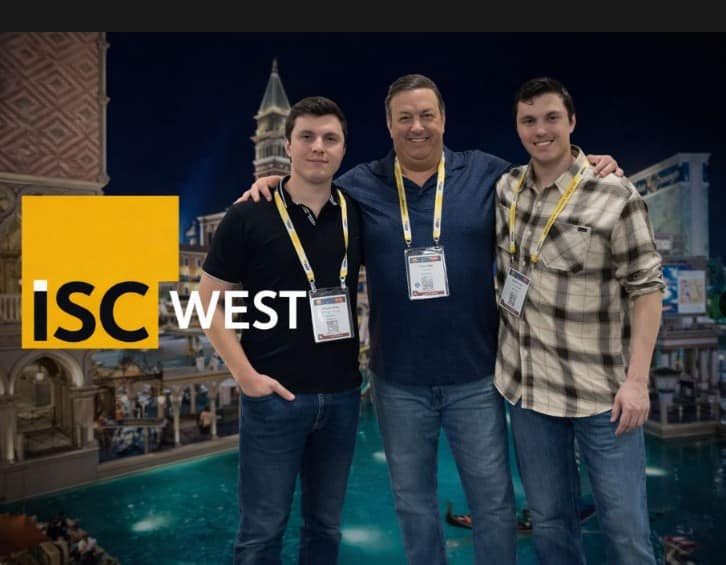
    What made the moment even better was having my sons there with me. Coleton Hills, DCIS, and Cooper Hills got to meet Ray firsthand, not just as a name or a body of work, but as someone who has contributed meaningfully to the evolution of security. Seeing that interaction, watching them listen, engage, and take it in, was one of those moments you don’t forget.

    And then there was Ray holding the book. That was a full-circle moment. The conversation, the exchange of ideas, and the next generation standing right there, it captured exactly what this industry is about. Experience passed forward, relationships built over time, and a shared commitment to doing the work the right way.

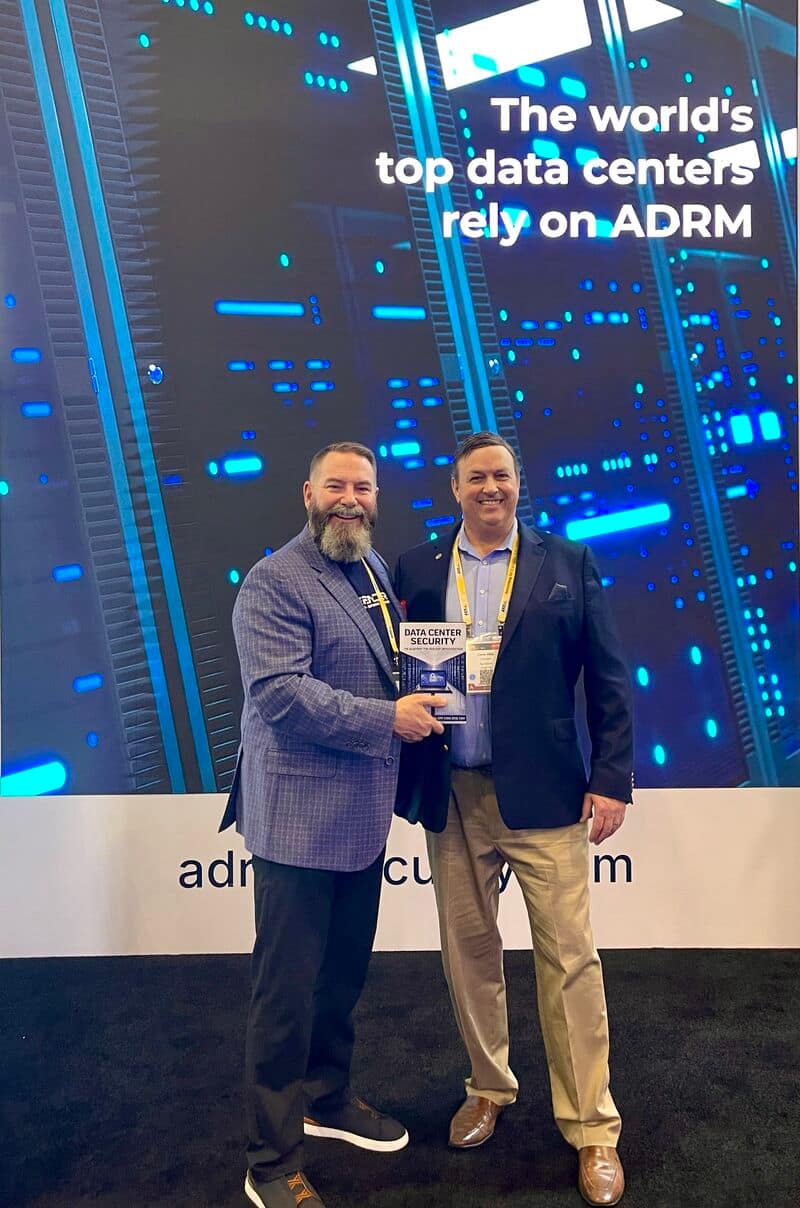
  • Dan O’Neill and I talk about my book, he wrote the Forward!

    Dan O’Neill and I talk about my book, he wrote the Forward!

    ISC West always brings together the best in our industry, but every once in a while, it delivers something more personal. This moment with Dan ONeill is one of those. Dan is the President and CEO of ADRM, a firm known for delivering high-level risk management, security engineering, and managed services to some of the most complex environments in the world. If you’ve spent any time around his team, you know the reputation is well earned, sharp, disciplined, and built on real-world experience.

    What most people do not see in this photo is the history behind it. Long before data centers, security consulting, or books, Dan and I served together in HHC, 3rd Battalion, 9th Infantry Regiment, one of the most deployed and battle-tested units in the U.S. Army. That kind of shared experience changes how you think about risk, leadership, and accountability. It does not fade when you leave the military, it carries forward into everything you build afterward. That’s what made this moment even more meaningful. Standing here at ISC West, holding Data Center Security: The Blueprint for a Resilient Infrastructure, a book Dan not only supported but helped shape by writing the foreword. There’s something powerful about having someone who understands both the operational reality and the mission mindset contribute to your work.

  • Attended ISC West

    Attended ISC West

    Walking the floor at ISC West this year carried a different weight. Bringing my twin sons into that environment wasn’t just about showing them the latest technology, it was about giving them a front-row view into the industry that has shaped so much of my career. From conversations with manufacturers and integrators to seeing how innovation is actually applied in the field, they were able to experience firsthand what security looks like at scale.

    What stood out most was how quickly they connected the dots. Data center security, AI-driven analytics, infrastructure protection, these weren’t abstract ideas anymore. They saw how design, engineering, and operations come together to protect critical systems, and more importantly, how relationships drive this industry forward. Watching them engage, ask questions, and hold their own in conversations reinforced something I’ve always believed: this field rewards those who show up, stay curious, and put in the work.

    There’s also a deeper element to it. This isn’t just about exposure, it’s about continuity. Bringing the next generation into the space reflects the same values that built my path: service, discipline, and a commitment to doing things the right way. Whether they choose to follow this path or not, they now understand the responsibility that comes with protecting infrastructure that the world depends on. And that’s something you can’t teach from the sidelines.

  • Threats & Advanced Technologies

    Threats & Advanced Technologies

    We help organizations stay ahead of evolving risks by identifying, evaluating, and integrating responses to emerging threats and advanced technologies. The threat landscape is no longer static, adversaries are leveraging new tools, targeting infrastructure in unconventional ways, and exploiting gaps created by rapidly deployed technologies. Our role is to provide clarity in this environment, helping clients understand what matters, what is actionable, and how to adapt security strategies without introducing unnecessary complexity or risk.

    Our approach begins with continuous monitoring and analysis of emerging threat vectors, including drone-enabled reconnaissance and disruption, coordinated physical sabotage, insider-enabled attacks, and the convergence of cyber and physical tactics targeting connected systems. At the same time, we assess the rapid expansion of technologies such as AI-driven video analytics, edge-based IoT devices, cloud-connected security platforms, and automated response systems. We evaluate both the opportunity and the risk, ensuring that new capabilities enhance security outcomes without creating new vulnerabilities or operational dependencies.

    Lock Risk differentiates itself by grounding innovation in engineering discipline and operational reality. We work with clients to validate advanced technologies through structured testing, pilot programs, and integration planning, ensuring compatibility with existing infrastructure, network environments, and governance requirements. This includes assessing cybersecurity implications of IP-based devices, validating analytics performance in real-world conditions, and ensuring that automation and AI outputs align with operational workflows and decision-making processes. Our experience in mission-critical environments ensures that innovation is introduced in a controlled, measurable way that supports reliability and resilience.

    We also help organizations incorporate emerging threats and technologies into their broader security strategy and lifecycle planning. This includes updating threat models, refining design standards, and aligning procurement and specification processes to account for new capabilities. We support the development of policies and governance frameworks that address issues such as data integrity, system interoperability, and the long-term sustainability of deployed technologies. The goal is to ensure that organizations are not reacting to change, but proactively shaping their security posture to meet it.

    From evaluating next-generation security technologies to preparing for evolving threat scenarios, Lock Risk provides a forward-looking, pragmatic approach to Emerging Threats and Advanced Technologies. The result is a security program that is not only current, but future-ready, capable of adapting to innovation while maintaining the stability, control, and resilience required in today’s high-risk environments.

  • Training & Awareness

    Training & Awareness

    We deliver Security Training and Awareness programs that move beyond basic instruction to build a security-conscious culture across your organization. Effective security is not achieved through technology alone, it depends on people who understand risk, recognize threats, and know how to respond. We design and implement training programs that align with your operational environment, whether supporting data centers, critical infrastructure, or enterprise facilities, ensuring that personnel at every level are equipped to act with clarity and confidence.

    Our approach begins with understanding your organization’s risk profile, operational workflows, and regulatory requirements. We develop tailored training programs that address both general awareness and role-specific responsibilities, from executive leadership and facilities teams to security operators and frontline personnel. This includes training on access control protocols, incident response procedures, surveillance and monitoring practices, insider threat awareness, and the convergence of physical and cyber risks. We ensure that training content is relevant, practical, and directly tied to the systems and processes your teams use every day.

    Lock Risk differentiates itself by integrating training with real-world scenarios and operational testing. We incorporate scenario-based exercises, tabletop simulations, and live drills that reflect actual threat conditions, such as unauthorized access attempts, perimeter breaches, system failures, or coordinated cyber-physical incidents. These exercises validate not only individual knowledge, but team coordination, communication pathways, and decision-making under pressure. The result is a workforce that is not only trained, but practiced, capable of executing effectively when it matters most.

    We also support the development of ongoing awareness programs that reinforce security as a continuous priority. This includes periodic refresher training, targeted awareness campaigns, and updates aligned with emerging threats or changes in technology and policy. We help organizations embed security into daily operations through clear communication, accessible resources, and measurable engagement strategies, ensuring that awareness does not fade over time.

    From foundational training programs to advanced, scenario-driven exercises, Lock Risk provides a structured, operationally grounded approach to Security Training and Awareness. The outcome is a more informed, prepared, and resilient organization, where people, processes, and technology work together to reduce risk and strengthen overall security posture.